Fatty Liver, Fibrosis & Liver Health Resources

home > Liver Health

LIVER HEALTH

Your Liver, Your Metabolic Dashboard

An education-first resource to help patients, healthcare partners, and distributors understand liver health — before discussing any product, evidence, or clinical pathway.

1 in 4

Adults affected by MASLD globally

~70%

Of type 2 diabetes patients have fatty liver

50-80%

Are undiagnosed in early stages

WHY NOW

Why Liver Health Matters Now

Metabolic dysfunction-associated steatotic liver disease (MASLD) is the most common chronic liver condition worldwide — affecting over 1 billion people. Yet most have never had their liver fat measured. The convergence of obesity, diabetes, and the GLP-1 revolution has made liver assessment a mainstream metabolic health priority.

The Silent Epidemic

MASLD often progresses without symptoms for years. By the time elevated liver enzymes appear, significant fat accumulation may already be present. Early detection through quantitative assessment changes this — turning an invisible risk into a measurable, manageable health metric.

The GLP-1 Era Changes Everything

With GLP-1 receptor agonists now approved for weight management and MASH treatment, liver fat monitoring has shifted from specialist niche to mainstream metabolic care. Every weight management program now has a reason to track liver fat — creating a new standard of care and a rapidly growing market.

1

Identify Risk

Recognize metabolic risk factors – obesity, diabetes, dyslipidemia, family history.

2

Measure

Quantitative liver fat and stiffness assessment with accessible point-of-care tools.

3

Track & Compare

Establish baseline values; track changes over time with objective, numeric data.

4

Act with Confidence

Share objective data with clinicians; make informed follow-up and treatment decisions.

EDUCATION TOPICS

Start With the Questions People Actually Ask

An education hub for anyone – patient, clinician, or business partner. Tap any topic below to explore the essentials, with source citations throughout.

Understanding NAFLD / MASLD

What fatty liver disease means, why the terminology changed, and why early stages are silent.

Read more >>

  • NAFLD → MASLD: In 2023, global liver societies renamed the condition to emphasize its metabolic roots. “MASLD” replaces “NAFLD” — the same disease, but a name that reflects its connection to metabolic health.
  • Spectrum of disease: Simple steatosis (fat accumulation) → MASH (inflammation + fat) → fibrosis → cirrhosis. Each stage is measurable and, in early stages, reversible.
  • The danger of silence: Most people with early-stage fatty liver have no symptoms. Liver enzymes can remain normal even with significant fat accumulation — blood tests alone are insufficient for screening.
Sources: AASLD Practice Guidance (Hepatology, 2023); Rinella ME et al., multi-society Delphi consensus on NAFLD nomenclature.

GLP-1 & Liver Health

Why liver fat monitoring is becoming part of metabolic care in the GLP-1 era.

Read more >>

  • Beyond weight loss: GLP-1 receptor agonists (semaglutide, tirzepatide) don’t just reduce body weight — they directly impact liver fat. FDA approved Wegovy for MASH treatment in August 2025, making liver monitoring a standard component of metabolic care.
  • Baseline matters: A quantitative liver fat measurement at the start of a weight management program establishes a clear starting point — enabling objective tracking alongside weight, glucose, and metabolic markers.
  • Monitoring over time: Follow-up liver fat assessments help clinicians discuss metabolic progress with patients, reinforcing adherence and providing tangible feedback beyond the scale.
FDA CDER (2025-08-27): VCTE-measured liver stiffness accepted as surrogate endpoint for MASH trials. Educational content — not treatment advice.

Metabolic Health & Liver

The connection between obesity, insulin resistance, diabetes, and liver fat accumulation.

Read more >>

  • A two-way street: Insulin resistance drives liver fat accumulation, and excess liver fat worsens insulin resistance. Breaking this cycle starts with measurement.
  • Diabetes and the liver: An estimated 70% of people with type 2 diabetes have concurrent fatty liver disease. Most haven’t been screened — routine liver fat assessment in diabetes care remains a major unmet need.
  • Metabolic syndrome clustering: Obesity, hypertension, dyslipidemia, and elevated glucose often co-occur with fatty liver. Addressing liver health means addressing metabolic health as a whole.
Sources: Younossi ZM et al., Hepatology 2016 (global epidemiology); EASL-EASD-EASO Clinical Practice Guidelines (J Hepatol, 2024).

How to Measure Liver Fat

Compare testing methods: biopsy, MRI-PDFF, ultrasound, and modern point-of-care assessment.

Read more >>

  • No single “best” test: Different methods answer different questions. Understanding the trade-offs helps patients and clinicians choose appropriately.
  • Accessibility gap: MRI-PDFF is the non-invasive reference standard, but cost, scheduling, and infrastructure limit its reach. This is where point-of-care tools create the most value.
  • The quantitative shift: From “looks fatty on ultrasound” to “liver fat is 18%” — quantitative assessment enables tracking, comparison, and evidence-based conversations.
See the Testing Methods comparison table below for a detailed breakdown.

Liver Health Self-Assessment

Use a practical risk checklist to prepare better questions for your healthcare professional.

Read more >>

  • Risk doesn’t mean disease: The checklist identifies factors associated with higher likelihood of fatty liver — it is a conversation starter, not a diagnosis.
  • Prepare for your visit: Knowing your risk factors helps you have a more productive conversation with your clinician about whether liver fat assessment is appropriate.
  • Scroll down to use the interactive checklist and see your personalized recommendation.

TESTING METHODS

How Liver Fat Is Assessed Today

Each method has its role. This comparison helps visitors understand the clinical landscape – not to replace medical guidance, but to inform better conversations with providers and business partners.

METHOD

WHAT IT DOES

QUANTITATIVE?

POC?

BEST FOR

Liver Biopsy

Invasive tissue sample examined under microscope. Historical reference standard.

✓

Semi-quantitative

×

Selected clinical cases requiring histology. Not suitable for screening or routine follow-up.

MRI-PDFF

Non-invasive imaging for liver fat quantification. Current non-invasive reference standard.

✓

Full-liver fat fraction

×

Clinical trials, specialist referral, cases requiring highest precision.

Ultrasound

Widely available imaging. Useful for many liver evaluations.

×

Qualitative only

✓

General hepatobiliary evaluation. Limited for precise fat quantification or tracking changes.

Point-of-Care Assessment

Portable, quantitative liver fat and stiffness measurement. Ultrasound-based attenuation or elastography.

✓

Numeric output (dB/m, kPa, %)

✓

Screening, clinical follow-up, metabolic programs, pharmacy, primary care. Accessible where MRI and biopsy are impractical.
This table provides an educational overview. Testing decisions should always be discussed with a qualified healthcare professional. Point-of-care assessment is intended to supplement, not replace, comprehensive clinical evaluation.

THE OPPORTUNITY

Why Accessible Measurement Changes Everything

Knowing the methods is one thing. Understanding why having the right tool in the right setting matters — that’s where patient outcomes improve and business cases strengthen.
Most people who need a liver assessment never get one.

MRI requires a hospital, a referral, and weeks of waiting. Biopsy is invasive and carries risk. Conventional ultrasound gives a subjective “looks fatty” — not a number you can track. The gap between who needs measurement and who gets it is where accessible, quantitative point-of-care tools create both clinical and commercial value.

>1 Billion

People with MASLD worldwide

<10%

Have been formally assessed

POC Tools

Bridge the accessibility gap

$3.2B+

Liver diagnostics market by 2030

APPLICATION SCENARIOS

Where Liver Assessment Makes a Difference

Different settings, different needs. Here’s how quantitative point-of-care liver assessment fits into real-world clinical and commercial workflows.

FattaLab®

Weight Management & GLP-1 Clinics

Establish baseline liver fat at program entry. Track changes alongside weight loss — giving patients and clinicians objective metabolic feedback beyond the scale. Ideal for semaglutide/tirzepatide monitoring.

FattaLab®

Pharmacy & Retail Health

Walk-in liver fat screening in 30 seconds. Revenue-generating health service that drives foot traffic. Pharmacists identify metabolic risk, refer to GPs, and build longitudinal customer relationships.

Liverscan®

Hepatology & Gastroenterology

Real-time B-mode imaging guides precise stiffness measurement. r=0.86 vs FibroScan for fibrosis staging. 4 measurements in ~1 minute vs 10 for FibroScan — doubling daily patient throughput.

Liverscan®

Primary Care & Endocrinology

Screen at-risk diabetic and metabolic syndrome patients during routine visits. Portable, wireless — moves between exam rooms. Objective data supports specialist referral decisions.

Both Products

Corporate & Insurance Wellness

FattaLab for population-level fat screening; Liverscan for comprehensive liver assessment including fibrosis risk. Data-driven wellness programs that reduce long-term claims and demonstrate ROI to payers.

Both Products

Community Screening & Public Health

Portable, battery-operated, wireless — deploy anywhere. Liverscan provides full liver assessment (fat + stiffness); FattaLab enables high-throughput fat screening. Together: comprehensive community liver health programs.

PRODUCTS

Finding the Right Tool for the Right Need

Two products. Two clinical dimensions. One shared goal: making quantitative liver assessment accessible wherever patients are.

Which product fits your scenario?

Choose FattaLab® when you need...

  • Liver fat quantification (steatosis)
  • GLP-1 therapy monitoring (baseline → follow-up)
  • Pharmacy / retail health screening
  • Weight management program integration
  • High-throughput, 30-second assessments
  • Consumer-friendly, palm-sized form factor

Choose Liverscan® when you need...

  • Liver stiffness assessment (fibrosis risk)
  • B-mode real-time imaging guidance
  • Hepatology / GI clinical workflows
  • Comprehensive liver assessment (fat + stiffness)
  • TE accuracy (AUROC=0.97 vs biopsy)
  • Wireless handheld elastography

Liver Fat Quantification

MAP = Multi-Domain Attenuation Parameter. CAP® Is A FibroScan® Trademark. Does Not Use Elastography — Measures Liver Fat Via Ultrasound Attenuation.
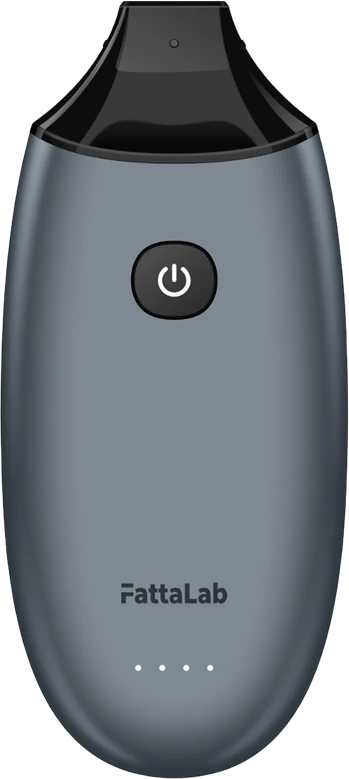
FattaLab®

The world’s first palm-sized fatty liver diagnostic device. Multi-domain Attenuation Parameter (MAP) technology provides quantitative liver fat assessment in approximately 30 seconds — designed for clinics, pharmacies, weight management programs, and eventually home use.
  • Technology: AIFF algorithm, Multi-domain Attenuation Parameter (MAP)
  • Weight: 120g, wireless connection to smartphone
  • Measurement time: ~30 seconds + auto-analysis
  • FDA 510(k): K253221 (professional use)
  • Award: CES 2026 Digital Health Innovation Award

Liver Stiffness Assessment

Liverscan: 2× FDA 510(K) Cleared. Both Models Share Identical Probe Hardware.

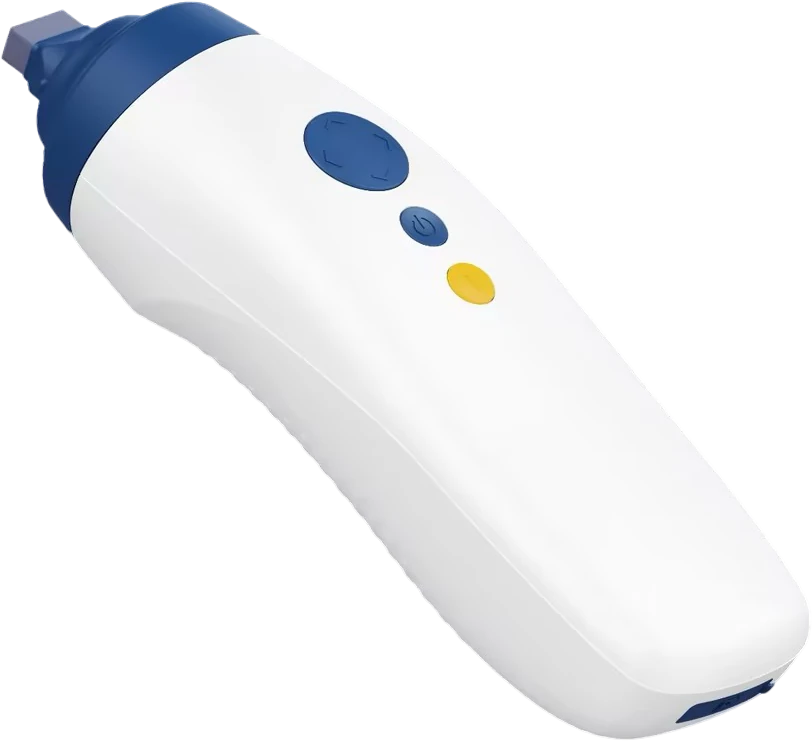
Liverscan®

The world’s first wireless handheld liver elastography system. B-mode ultrasound real-time imaging guides transient elastography (TE) measurement — combining visualization and quantitative stiffness assessment in one portable probe.
  • Technology: B-mode imaging + transient elastography (TE)
  • Accuracy: r=0.86 vs FibroScan® (fibrosis); r=0.80 (steatosis)
  • Efficiency: 4 measurements vs 10 (FibroScan®), ~1 min workflow
  • FDA 510(k): K233401 (Mobile) + K242496 (C)
  • NMPA: 国械注准 20243071846 (China Class III)

Together: A Complete Point-of-Care Liver Assessment Toolkit

FattaLab® quantifies liver fat — the silent metabolic risk factor most patients have never measured.

Liverscan® quantifies liver stiffness — the progression marker that determines clinical urgency.

Together they cover the two most clinically relevant dimensions of liver health, accessible at the point of care — in clinics, pharmacies, and community settings worldwide.

SELF-ASSESSMENT

Know Your Liver Health Risk Factors

Check any that apply. This is not a diagnosis – it’s a preparation tool for a more informed conversation with your healthcare professional.

Higher BMI Or Central Obesity

✓

Type 2 Diabetes Or Insulin Resistance

High Triglycerides Or Dyslipidemia

Sedentary Lifestyle Or Low Physical Activity

Family History Of Metabolic Disease

Currently On GLP-1 Or Weight Management Program

Unexplained Liver Enzyme Changes (ALT/AST)

Concern About Fatty Liver Risk

Low-Moderate Risk Profile

You’ve identified 1 risk factor(s). While this doesn’t indicate disease, it may be worth discussing with your healthcare provider at your next routine visit.

Suggested step: Mention these factors to your clinician and ask whether liver health assessment is appropriate for you.

FOR OUR PARTNERS

The Liver Health Opportunity

The liver diagnostics market is projected to reach $3.2B+ by 2030, driven by GLP-1 adoption, metabolic disease prevalence, and the global shift toward accessible point-of-care diagnostics. Eieling partners with distributors, clinic networks, pharmacy chains, and metabolic health programs worldwide.

1 in 4

Global MASLD Prevalence

Over 1 billion people worldwide. The most common chronic liver condition – and the most underdiagnosed. Massive unmet screening demand.

$3.2B+

Liver Diagnostics Market

Projected at 7.2% CAGR through 2030. Point-of-care is the fastest-growing segment. First movers in each market capture disproportionate share.

2-10×

Higher Risk for T2D Patients

Type 2 diabetes patients have 2-10x the risk of advanced liver disease. Yet screening rates remain low – unmet clinical need = market opportunity.

GLP-1 Era

New Standard of Care

FDA acceptance of non-invasive liver endpoints (2025) opens liver monitoring as a routine companion to metabolic treatment – creating a structural tailwind for POC liver diagnostics.

We Partner With

Medical Device Distributors

Exclusive territory rights. Regulatory support. Clinical training programs. Co-marketing investment.

Pharmacy Chains

Walk-in screening revenue model. Device placement + per-test economics. Differentiate from competitors.

Clinic Networks

Integrate liver assessment into metabolic, diabetes, and weight management workflows. Reimbursement pathway support.

Public Health Programs

Population screening deployments. NGO partnerships. Government tender support. Turnkey community screening solutions.

Interested in bringing liver health assessment to your market?

We partner with distributors, clinic networks, pharmacy chains, and metabolic health programs worldwide. Let’s discuss how Eieling technology can serve your customers.