
Intro: 30-second quantitative · FDA-cleared · Leading brands have already moved first
01 A single guideline reshaped the way 611 million people manage their health
In 2026, the Chinese Society of Endocrinology of the Chinese Medical Association published the Guidelines for Long-Term Weight Management and Clinical Application of Pharmacotherapy in Patients with Obesity (2026 Edition), officially incorporating quantitative liver fat measurement into the diagnostic criteria for obesity.
By 2030, China’s overweight/obese population is projected to reach 611 million — converging on two simultaneous waves:
- GLP-1 weight-loss drug boom — exponential growth in the medication-taking population;
- Awakening monitoring demand — weight dropped, but how much has liver fat actually improved? Without quantification, there is no answer.
Policy tailwinds + market gaps — two variables are aligning at the same time.
02 People on GLP-1 all lack one type of monitoring
Weight-loss drugs answer “how much weight lost,” but they cannot answer another question:
Has liver fat gone down along with it?
Fatty liver is the “silent liver disease” — no pain, no warning, and by the time it’s detected, it is often already at a moderate-to-advanced stage. The weight-loss population in the GLP-1 era is precisely the group that most needs continuous, quantitative, and trackable liver fat monitoring.
“GLP-1 + liver monitoring” is becoming a new essential combination.
03 30 seconds — bringing down the barrier to monitoring
Traditional quantitative liver fat measurement relies on expensive hospital equipment operated by specialized technicians. But this device —
- 30-second quantification: handheld, wireless, no fasting required, no blood draw;
- MAP (dB/m): multi-domain ultrasound attenuation parameter;
- Clinically validated consistency: MAP shows correlation of r = 0.80 with FibroScan® Controlled Attenuation Parameter (CAP), and r = 0.76 with the gold standard MRI-PDFF (P < 0.001, *n* = 48);
- FDA-cleared: 510(k) K253221, professional use, cleared in February 2026;
- Endorsed by Chinese guidelines: The 2026 Obesity Guidelines have listed ultrasound attenuation parameter as a diagnostic method for quantitative liver fat;
- CES Digital Health Innovation Award winner: 120g, automated acquisition, anytime, anywhere in 30 seconds.
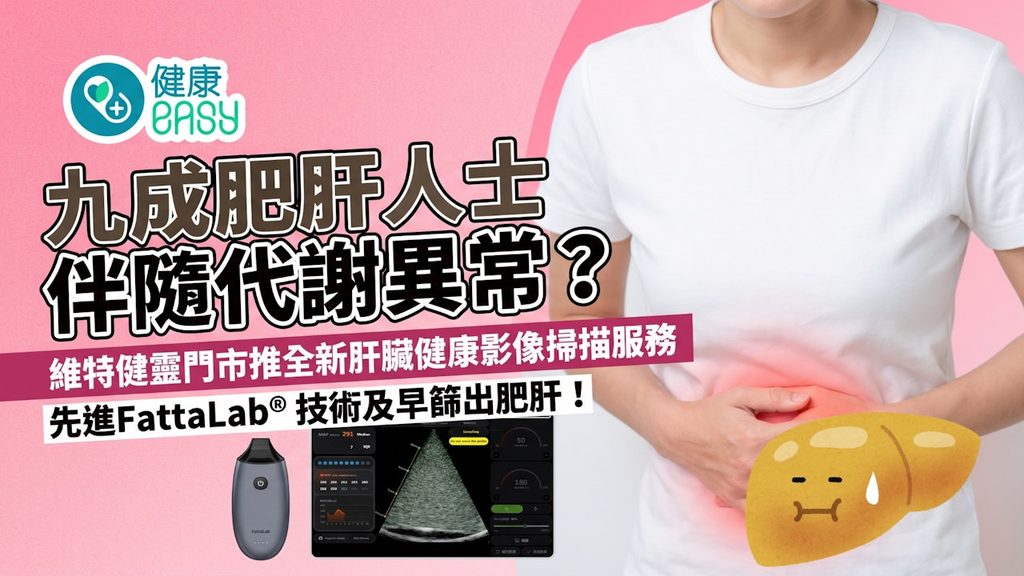
This is FattaLab® — the “liver health dashboard” for the GLP-1 era.
04 Leading brands have already validated it first
Is the “empowered health management” innovation model being embraced by the market? The answer comes from five leading brands — their validation now covers Hong Kong, Macau, Southeast Asia, and multiple countries in East Asia. Each one uses FattaLab® in its core scenario.
AIA
Integrating quantitative liver screening as a differentiated component of health services.
Vita Green
Launched the “Liver Health Imaging Scan Service” in retail stores, becoming the first brand in Hong Kong’s retail healthcare sector to bring quantitative liver fat testing into stores.
Amway
Enabling nutrition product users to see quantifiable improvements in their liver health.
Swisse
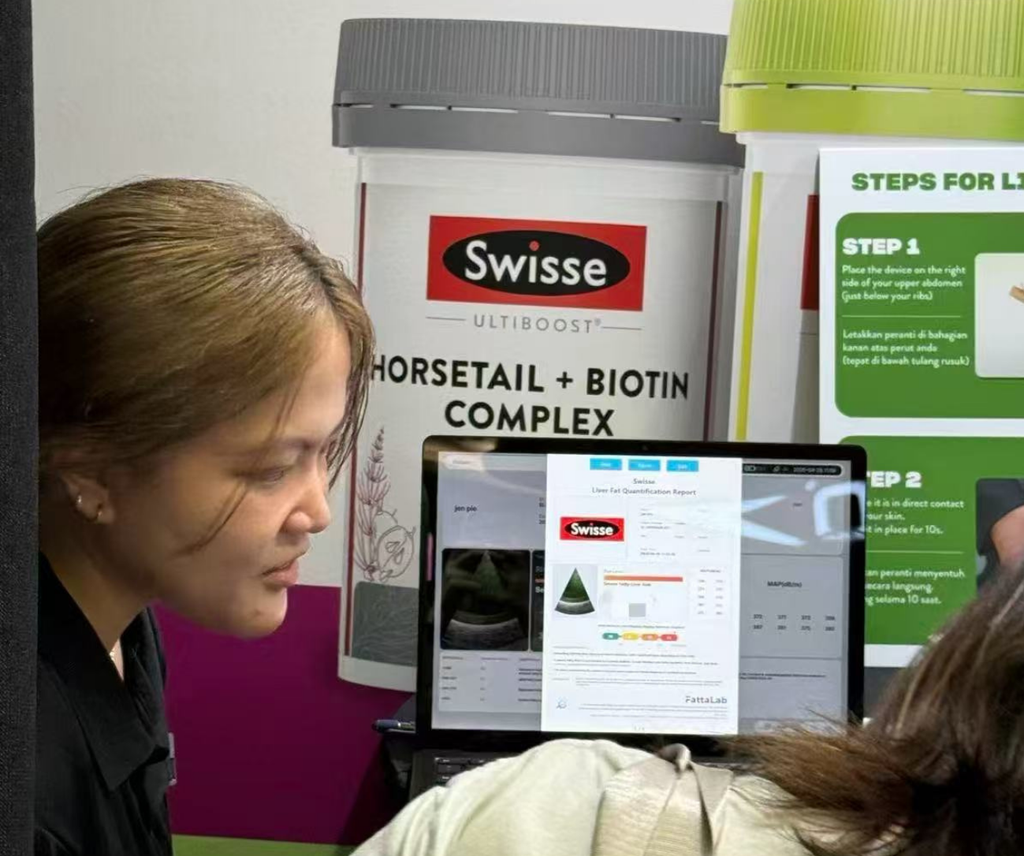
Combining liver health nutrition with quantitative monitoring, delivering a “consume + measure” closed loop at retail channels such as Watsons.
Rohto Pharmaceutical Group (wholly-owned subsidiary and pharmaceutical company)
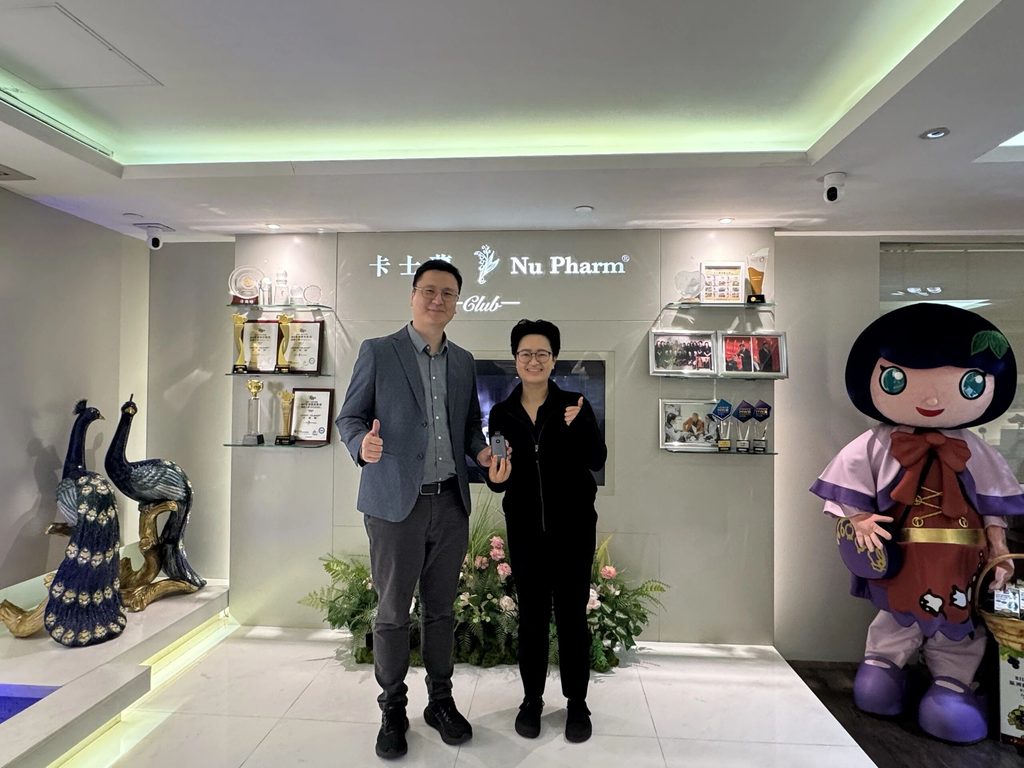
Deploying FattaLab for functional food and “ectopic fat” research.

05 Five scenarios — just the beginning
The validation from five leading brands across Hong Kong, Macau, Southeast Asia, and multiple East Asian countries points to a single conclusion: the “GLP-1 + quantitative liver fat monitoring” combination works across diverse scenarios.
- In insurance, it differentiates member health services;
- In retail healthcare, it gives retail stores a quantifiable liver fat testing capability for the first time;
- In nutrition and functional foods, it makes the “change from within” visible.
When the same technology is simultaneously adopted by insurance, retail, nutrition, and pharmaceuticals, it is no longer just a “product” — it is a replicable infrastructure.
Mainland China is the world’s largest weight-loss drug market and home to the largest fatty liver population. The same validation is now awaiting the next wave of early adopters.
References
- Overweight/obesity prevalence data in China (56.4% in 2024, projected to reach 611 million by 2030) and incorporation of quantitative liver fat measurement (FibroScan CAP/MRI-PDFF) into obesity diagnostic criteria: Guidelines for Long-Term Weight Management and Clinical Application of Pharmacotherapy in Patients with Obesity (2026 Edition), Chinese Society of Endocrinology, Chinese Medical Association, Chinese Journal of Endocrinology and Metabolism, August 2026, Vol. 42, No. 8.
- Liver International 2026 (Huang Z-H et al.).
Eieling Technology
Liver health, at your side
- Named to Forbes “Asia-Pacific 100 Companies to Watch” in 2023
- CES 2026 Digital Health Innovation Award Winner
📞 +86 156 0176 5936
🌏 www.eieling.com
✉ info@eieling.com